
Thai Nguyen Overview
Area
8,375.21 km²
Population
1.799.489 people
Per capita GRDP (2025)
over VND 114.1 million
FDI
198 projects, total registered capital of more than USD 18.7 billion (as of end of June 2026)
Industrial real estate is attracting growing interest from both domestic and international investors, driven by rising demand for factories and warehouses. With well-connected transport infrastructure, an abundant labor supply, and an increasingly favorable investment climate, Thai Nguyen is well-positioned to become one of northern Vietnam’s leading high-tech industrial hubs.
Strategic investment location – a key satellite of Hanoi
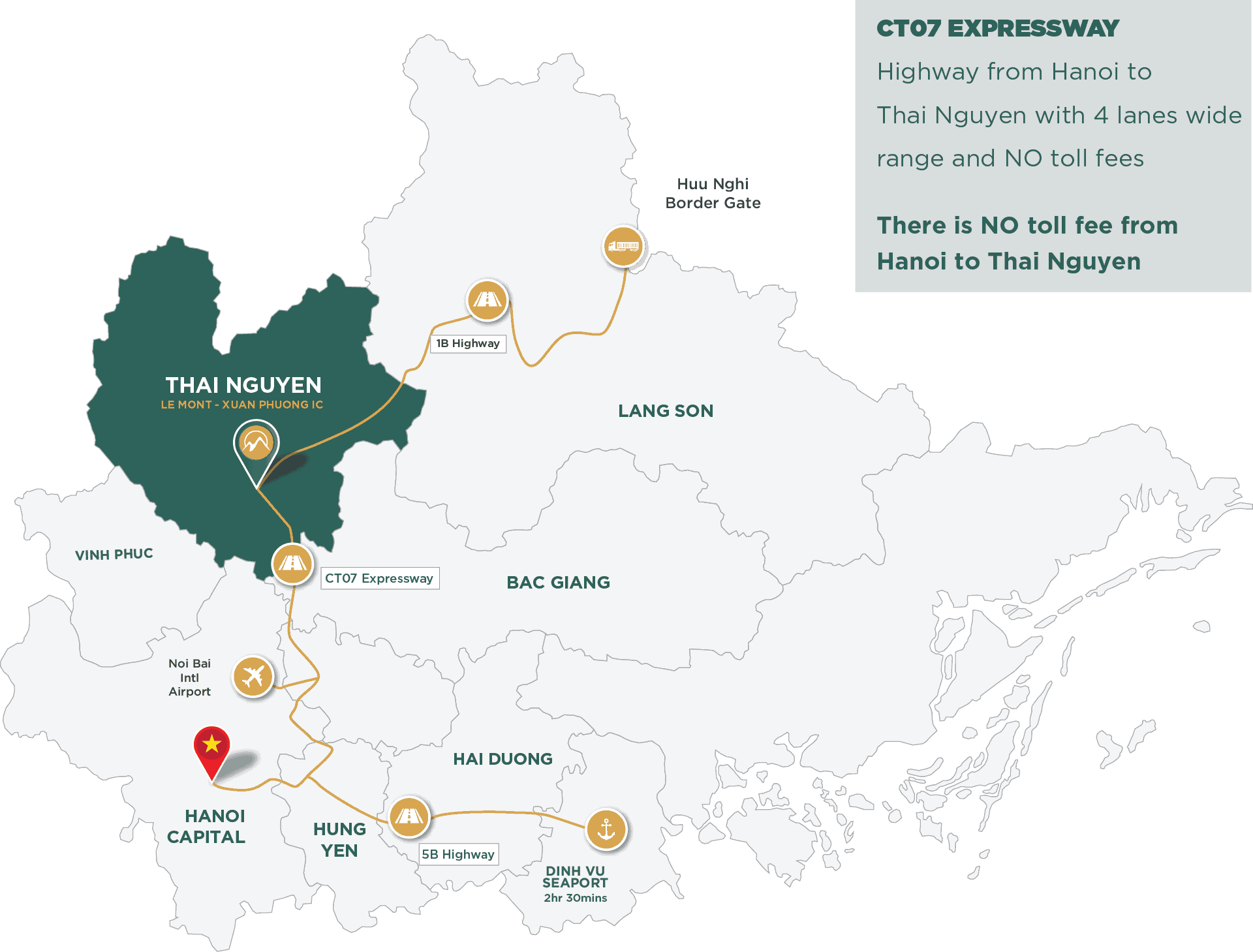
Thai Nguyen is an important economic and industrial hub in northern Vietnam, forming part of the Hanoi Capital Region’s broader development and connectivity network. The province connects the northern midlands and mountainous areas with the Red River Delta through an integrated network of roads, railways, and waterways, facilitating supply chain operations and market access.
• Noi Bai International Airport: approximately 50 km
• Central Hanoi: approximately 75 km
• Chinese border: approximately 150 km
• Hai Phong Port: approximately 176 km
Beyond its strategic location, favorable natural conditions, a stable living environment, and an abundant labor supply provide a solid foundation for businesses to invest, operate, and grow over the long term.
Integrated, modern transport and infrastructure system
Air: about 45 minutes from the province to Noi Bai International Airport; from the southern area (Phu Binh, Pho Yen, Song Cong) it is only about 30 minutes.
Road: the Hanoi – Thai Nguyen Expressway is about 62 km long; National Highway 37 connects Bac Ninh – Thai Nguyen – Tuyen Quang; National Highway 1B connects to Lang Son; Ring Road 5 of the Capital Region strengthens links with neighboring provinces.
Rail and waterways: the railway connects Hanoi, Hai Phong, Lao Cai, Lang Son and the North–South line; Da Phuc Port connects to the Red River Delta port system, including Hai Phong Port.

Electricity: in 2025, the province was supplied with power from 6 substations of 220 kV with a total capacity of 3,125 MVA, together with a 110 kV system, meeting the needs of industrial production and daily life.
Water and wastewater treatment: water supply and wastewater treatment projects continue to be invested in for industrial parks, industrial clusters and residential areas.
Telecommunications and digital infrastructure: Viettel, VNPT and MobiFone are present; the province is stepping up digital infrastructure in 2026–2030, towards digital government, digital economy and digital society
An economy on a strong growth trajectory
Thai Nguyen continues to record strong economic growth. In the first nine months of 2026, the province’s GRDP grew by 11.24% year on year, ranking 6th among 34 provinces and centrally governed cities. In the third quarter alone, growth reached 13.96%, ranking 2nd nationwide.
Industry remains a key growth driver. In the first nine months of 2023, the industry and construction sector grew by 15.63%, with industry alone recording growth of 16.49%. The Industrial Production Index increased by 23.23%, while export turnover reached approximately USD 30.38 billion, up 28.24%.
The province’s established manufacturing base, investment inflows and substantial export activity are driving growing demand for industrial land, factory space, warehouses, logistics and supporting industries in the years ahead.
A REGIONAL HUB FOR EDUCATION AND HEALTHCARE
10
UNIVERSITIES
12
COLLEGES
08
VOCATIONAL SCHOOLS
30
VOCATIONAL TRAINING CENTERS
Training a high-quality workforce: Thai Nguyen is a major education hub in the Northern Midlands and Mountains region, home to Thai Nguyen University, one of Vietnam’s three regional universities. In 2025, the university had nearly 115,000 students, with programs in fields relevant to industrial development, including engineering, technology, electronics, mechanics, foreign languages and economics.
800
MEDICAL FACILITIES
Regional healthcare capabilities: The province has 8,719 planned hospital beds, including 1,700 at Thai Nguyen Central Hospital, a leading specialized healthcare facility serving the region. The healthcare sector is accelerating digital transformation, with the goal of implementing electronic medical records at 100% of medical examination and treatment facilities.

A dynamic government – Partnering with businesses
Thai Nguyen prioritizes administrative reform, stronger governance and improvements to the investment and business environment. In 2025, the province ranked 6th among 34 provinces and centrally governed cities in the Public Administration Reform Index (PAR Index), with a score of 92.54%. It also achieved 84.64% in the Satisfaction Index of Public Administrative Services (SIPAS), with both scores exceeding the national averages. The province’s Provincial Competitiveness Index (PCI) continued to place it in the “Fair” governance quality group.
The provincial government regularly engages in dialogue with businesses, listens to their concerns and works to address their challenges. It also promotes digital transformation, simplifies administrative procedures and enhances transparency in application processing. These efforts help foster a stable and favorable investment environment, giving businesses greater confidence to expand their operations over the long term.
A modern industrial hub – a destination for international capital
Thai Nguyen has a well-established manufacturing base, with major corporations operating in electronics, supporting industries, mechanical engineering and high technology, including Samsung, Dongwha, Hansol Electronics, Sunny Opotech, Trina Solar and DBG. Their presence and continued investment are helping to build an increasingly integrated industrial ecosystem and supply chain.
FDI attraction in 2026
• In the first nine months of 2026, Thai Nguyen attracted more than USD 8 billion in additional FDI, placing it among Vietnam’s leading destinations for foreign investment.
• As of the end of September 2026, the province had 250 FDI projects, with total registered capital of approximately USD 19.5 billion.
• FDI inflows are concentrated in processing and manufacturing, electronics and high technology, contributing to the expansion of the province’s manufacturing ecosystem and industrial supply chains.


Expanding industrial development space
Under the adjusted Provincial Master Plan for 2021–2030, with a vision to 2050, Thai Nguyen aims to develop a modern, green and integrated network of industrial parks (IPs) and industrial clusters (ICs), with the capacity to accommodate high-tech projects.
• 37 industrial parks and 1 centralized information technology park, covering a total area of more than 14,155 hectares.
• 74 industrial clusters, covering approximately 4,069 hectares. Of these, 41 have been established, covering around 1,620 hectares and representing nearly VND 17 trillion in registered investment capital. The remaining 33 clusters are included in ongoing planning and investment attraction efforts.
Growth opportunities and development potential
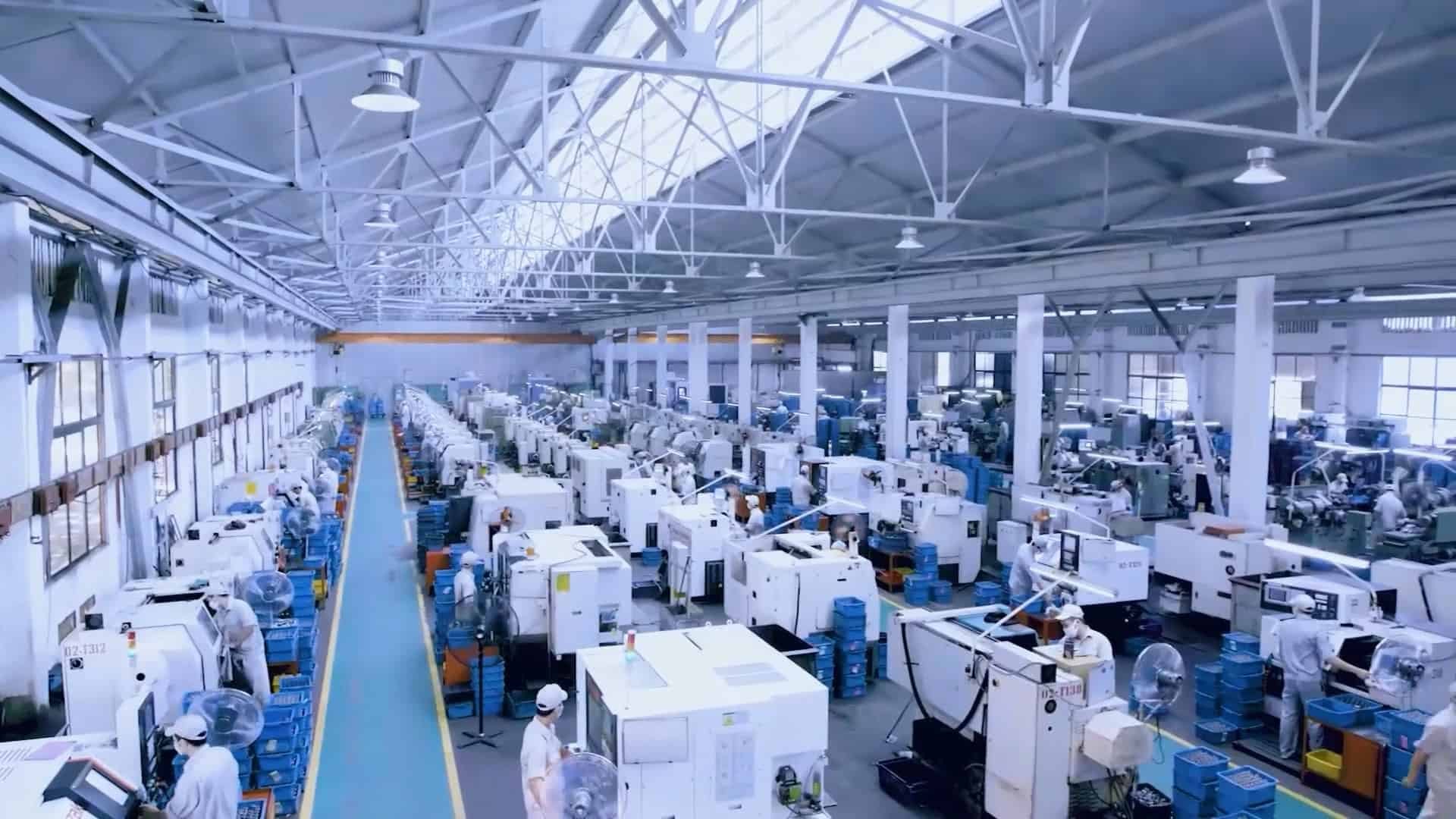
Thai Nguyen’s established manufacturing base, FDI inflows, improving infrastructure and expanding planned industrial land provide opportunities for both new investors and businesses looking to expand their operations. This potential is reflected in three key areas:
-
First, strong regional connectivity: Located within the development corridor of the Hanoi Capital Region and well connected to northern Vietnam’s industrial and logistics hubs, Thai Nguyen enables businesses to organize supply chains, transport raw materials and distribute products efficiently. Ongoing infrastructure upgrades are helping reduce travel times to Hanoi, Noi Bai International Airport and consumer markets.
-
Second, room for industrial land development: Compared with some more established industrial markets in the Hanoi Capital Region, Thai Nguyen still has room to develop additional industrial parks and clusters to meet demand for industrial land, factory space and production expansion in the years ahead.
-
Third, a growing industrial ecosystem: The presence of major corporations in electronics, technology and mechanical engineering creates spillover effects, attracting supporting businesses and suppliers. This, in turn, creates opportunities across industrial land, factory space, warehouses, logistics and production support services.
Alongside these advantages, the province is prioritizing site clearance, infrastructure investment and the preparation of serviced industrial land. It also implements investment incentives in accordance with government regulations and continues to strengthen dialogue with businesses and provide support throughout project implementation.
DO YOU HAVE ANY QUESTIONS?
FEEL FREE TO CONTACT US!
Copyright 2023 © LE MONT INVESTMENT JSC – INDUSTRIAL DEVELOPMENT